

What's happening in the air?
You can't see it. We can!
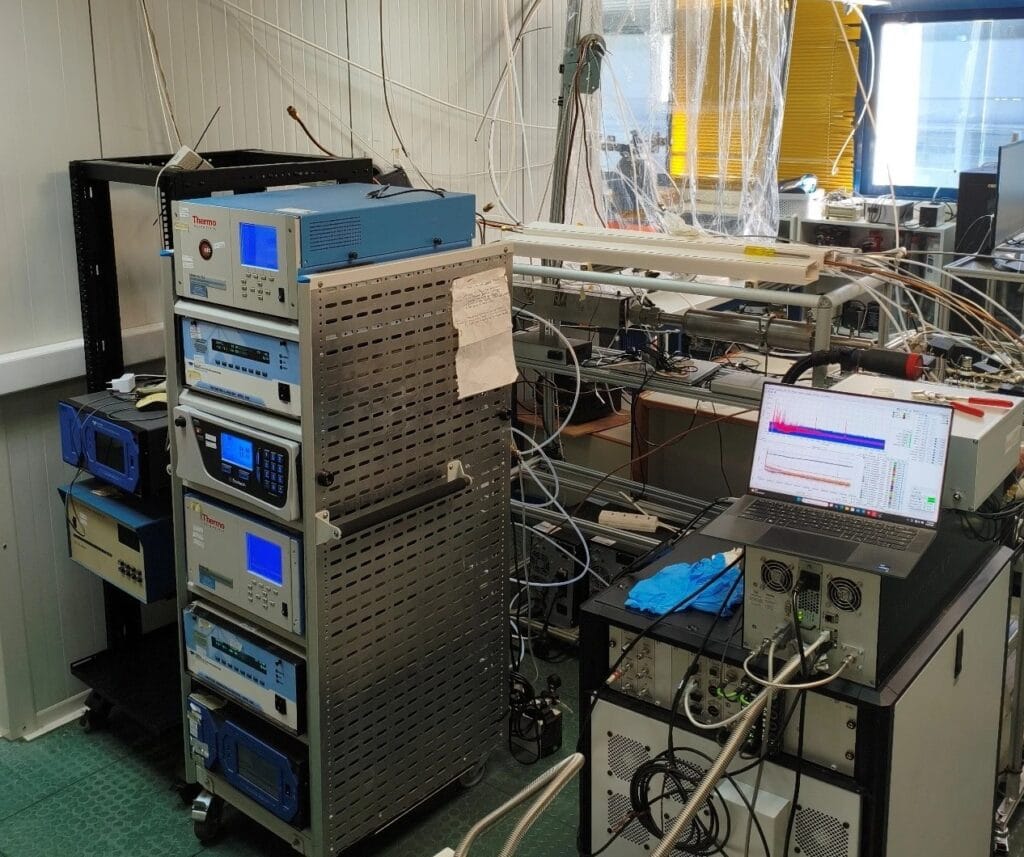
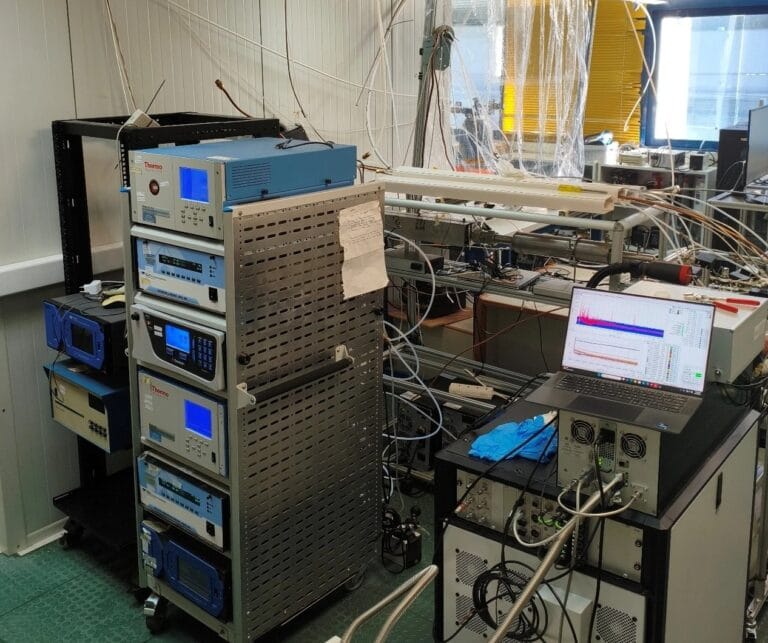
EmAIRging’s scientific team employs a suite of research-grade instruments for advanced air quality assessments, validation studies, and specialized sampling campaigns. This high-precision equipment complements the company’s IoT solutions, enabling accurate, trace-level characterization of atmospheric pollutants in both indoor and outdoor environments.
This equipment is operated both in our laboratory and, when necessary, deployed in the field — ensuring trace-level characterization of atmospheric pollutants in any environment.
Gas and particulate analyzers for many key pollutants
SO₂ Analyzer
Principle: UV fluorescence
Range: 0–1,000 ppb
Used for tracking industrial emissions, combustion sources, and validating low-cost sensors for sulfur dioxide.

CO Analyzer
Principle: NDIR (Non-dispersive infrared)
Range: 0–1,000 ppm
Ideal for combustion source monitoring, indoor/outdoor exposure, and sensor network calibration.
CO₂ Analyzer
Principle: NDIR (Non-dispersive infrared)
Range: 0–2,000 ppm
Monitors ventilation efficiency, carbon footprint, and occupant exposure indoors or outdoors.
NOₓ Analyzer
Principle: Chemiluminescence
Range: 0–1,000 ppb
Essential for traffic impact studies, urban air quality, and ozone formation analysis.
O₃ Analyzer
Principle: UV photometry or chemiluminescence
Range: 0–2,000 ppb or 0-10 ppm
Measures ground-level ozone, a key pollutant in photochemical smog and oxidation studies.
PM₁
Principle: Electrical mobility classification of aerosol particles combined with Condensation Particle Counter (CPC) detection.
Range: Up to 10⁷ particles/cm³ within a particle size range 2nm – 1000 nm
Characterization of ambient, indoor, or source-related aerosols; evaluation of particle formation, growth, and air quality exposure.
PM1-10
Principle: Optical light-scattering or real-time charge measurement
Range: Particle size range from 6 nm up to 10 μm
Used for combustion and engine emission studies, ambient air quality monitoring, occupational exposure and filtration studies and nanoparticle charge and size distribution analysis. Ideal for characterizing coarse and fine particles (PM2.5, PM₁₀).
Advanced analytical instruments
for comprehensive aerosol and gas-phase characterization — covering chemical composition and source-specific tracers.
PTR-TOF-MS
High-sensitivity, real-time detection and quantification of hundreds of volatile organic compounds (VOCs) simultaneously. Ideal for environmental air quality studies, source apportionment, and indoor/outdoor emissions analysis.
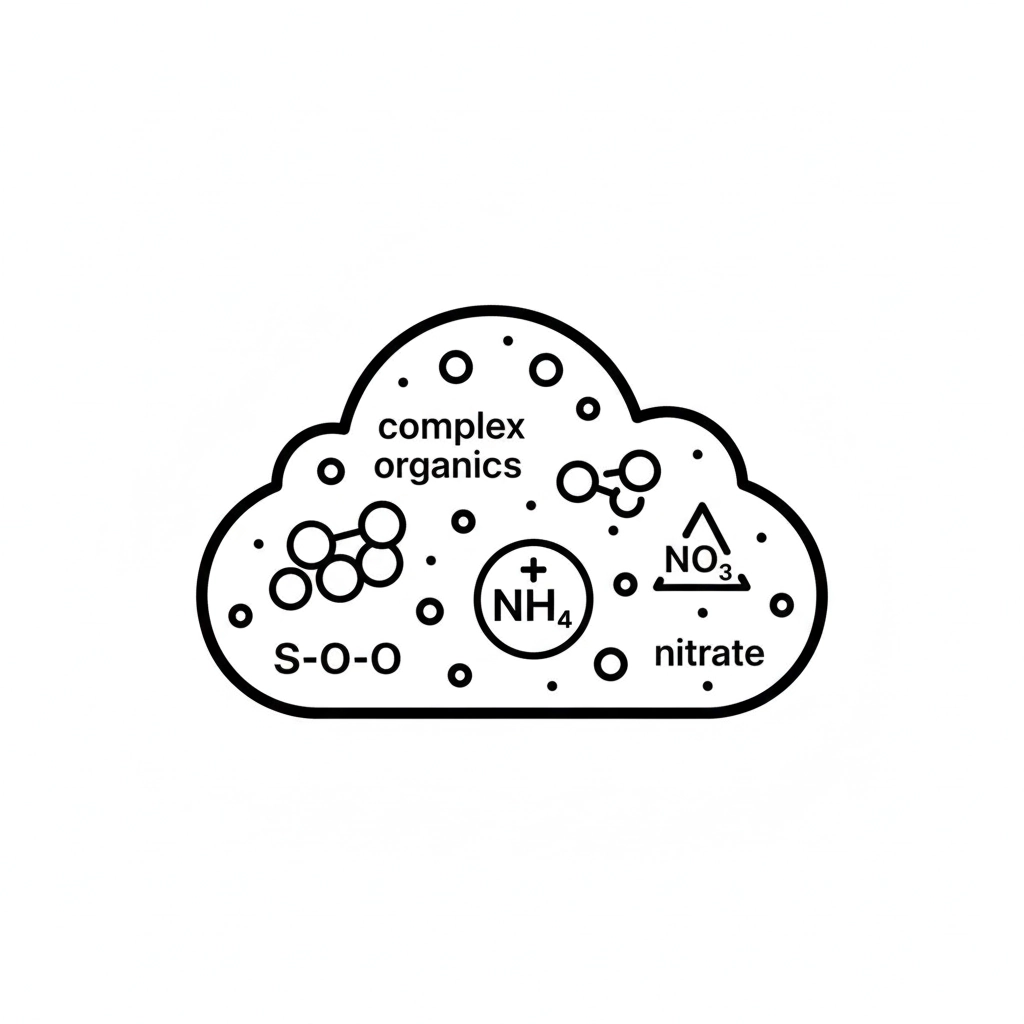
AMS (Aerosol Mass Spectrometer)
Analyzes the chemical composition of fine particles (organics, sulfate, nitrate, ammonium), providing insight into aerosol sources and transformations
Continuous Multi-Metals Αnalyzer
Principle: Automated X-ray fluorescence (XRF) spectrometry for continuous ambient air monitoring
Measurement Range: Quantifies up to 64 elements in PM₂.₅ or PM₁₀, including heavy metals and trace elements
Applications: Enables real-time, multi-element analysis of particulate matter for source apportionment, temporal recognition of pollution sources, determination of background concentrations, industrial emission monitoring and urban air quality studies.
Air sampling systems
for Particulate Matter, VOCs, PAHs, and aldehydes using sorbent tubes and active samplers
Environmental simulation chambers
for method development, exposure studies, and material evaluations
Dual-smog-chamber system (1.5 m³ each) for Atmospheric “perturbation” experiments or smog chamber (10 m³) constructed to provide the means for studying important atmospheric processes such as particle formation, photochemical aging and secondary organic aerosol formation. Both chamber set ups can be surrounded by UV light lamps to simulate chemical reactions due to UV light.
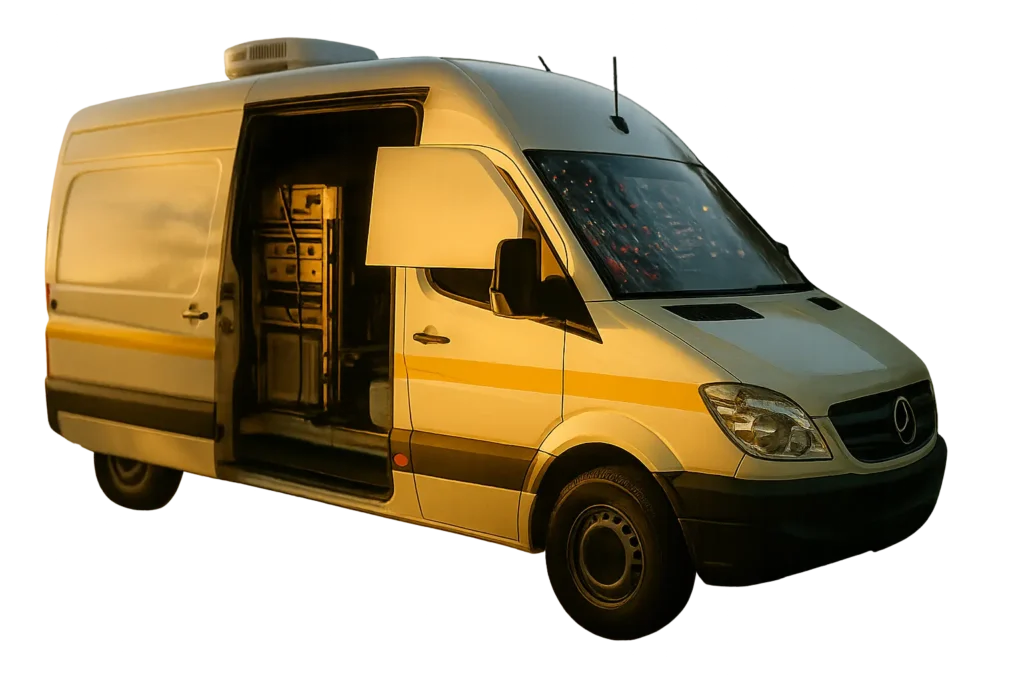
A full laboratory. Portable!
The mobile laboratory provides accurate measurements of key gaseous pollutants, such as carbon monoxide and carbon dioxide (CO, CO₂), nitric oxide and nitrogen dioxide (NO, NO₂), ozone (O₃), sulfur dioxide (SO₂), as well as volatile organic compounds (VOCs).
At the same time, it records particulate matter (PM₁, PM₂.₅, PM₁₀), black carbon (BC), and metal trace elements, while also offering the capability for sampling with portable samplers.
These instruments are part of our core laboratory infrastructure and can operate either in-house or in the field, depending on the project needs.